Interview with Chan Kit
CLIT7802: Creative Cultural Practice: Experiential Learning in Museum and Literary Festival | Book Club
Mar 21, 2026
Writing, Shooting, Staying Curious
From journalism to antiques to photography, Chan Kit has spent a decade capturing Hong Kong’s irreplaceable vibrancy.
By CHEN WEIXING, WANG KEHANG, and WONG HOLLIS
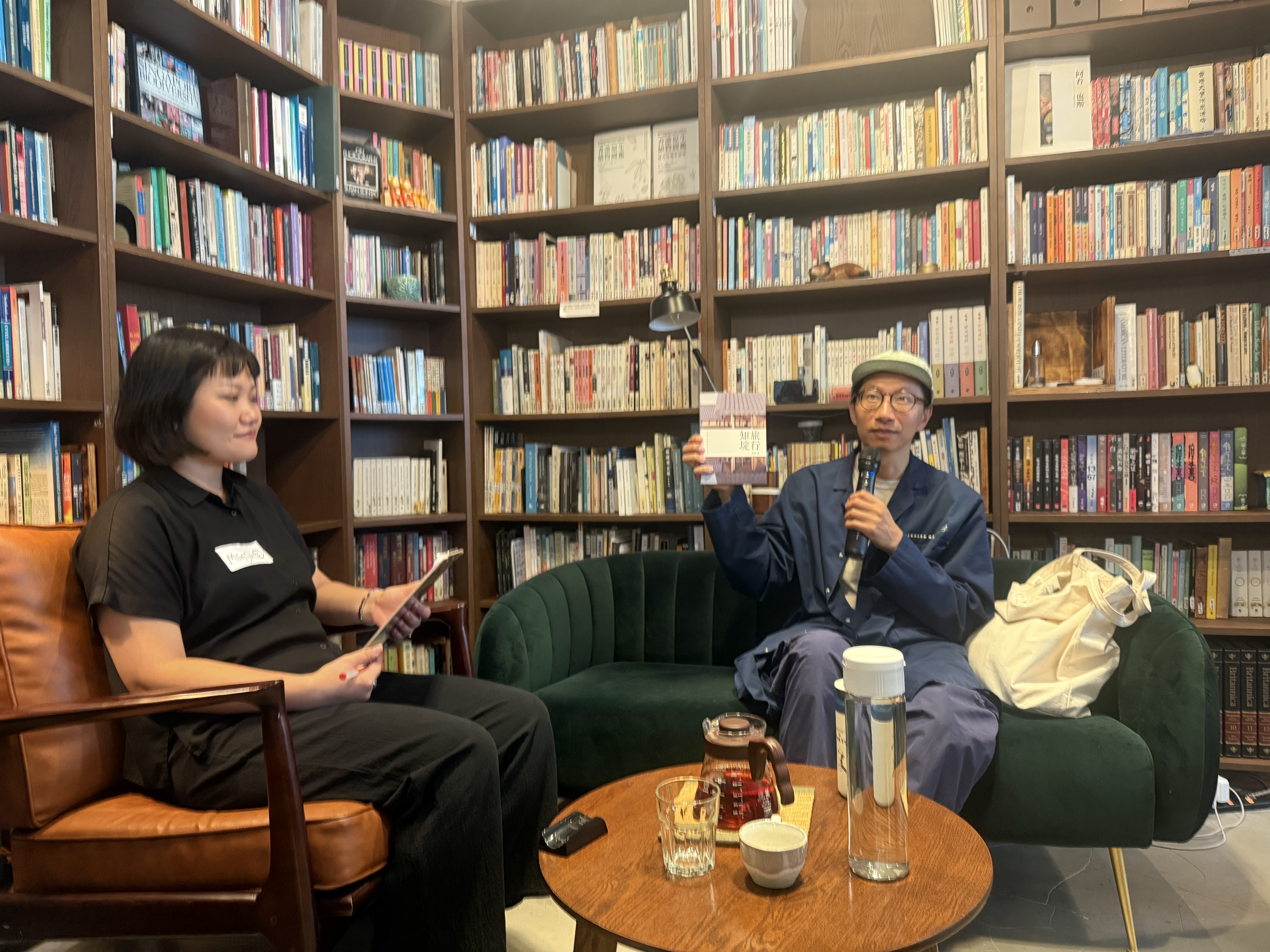
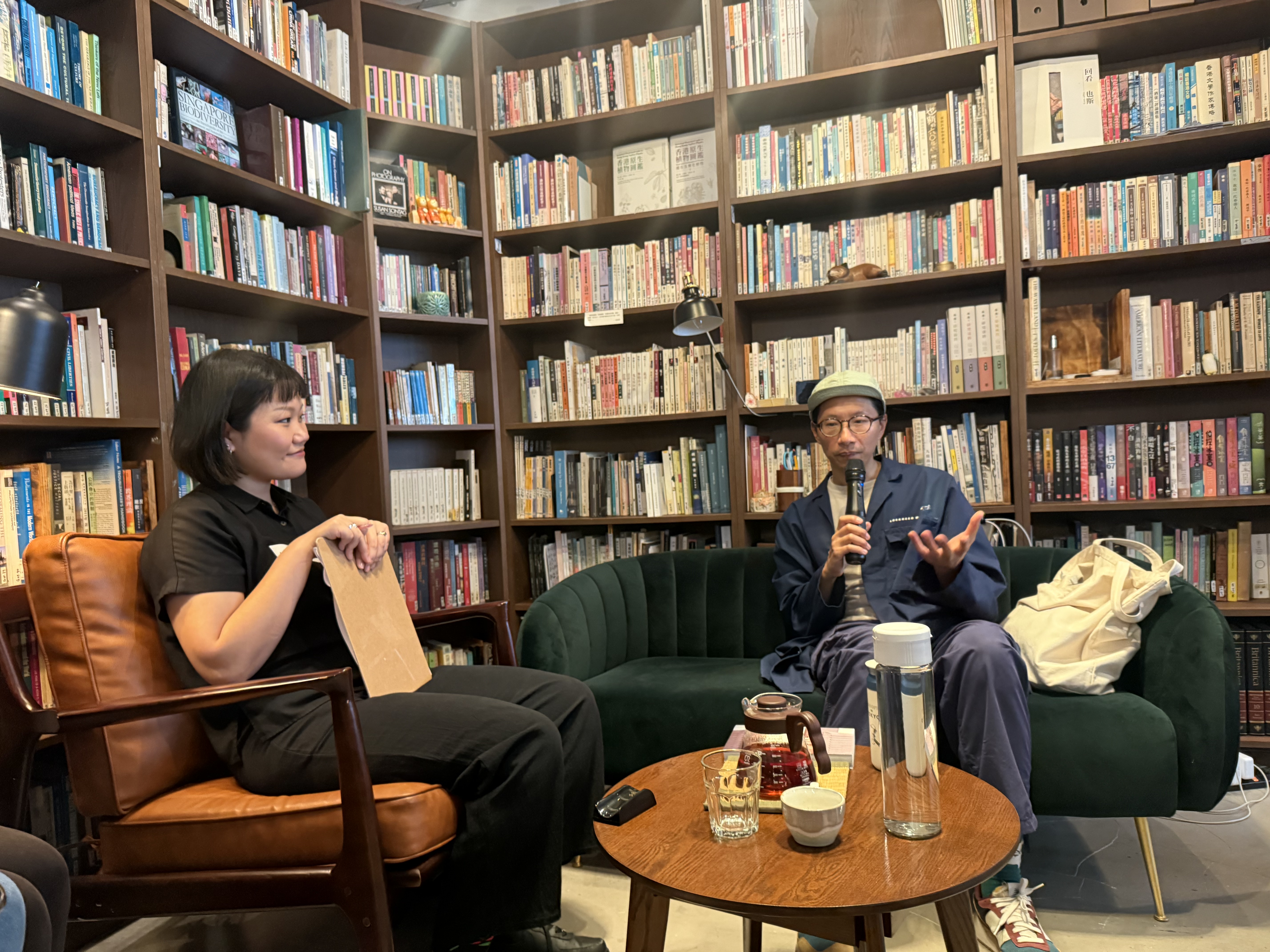
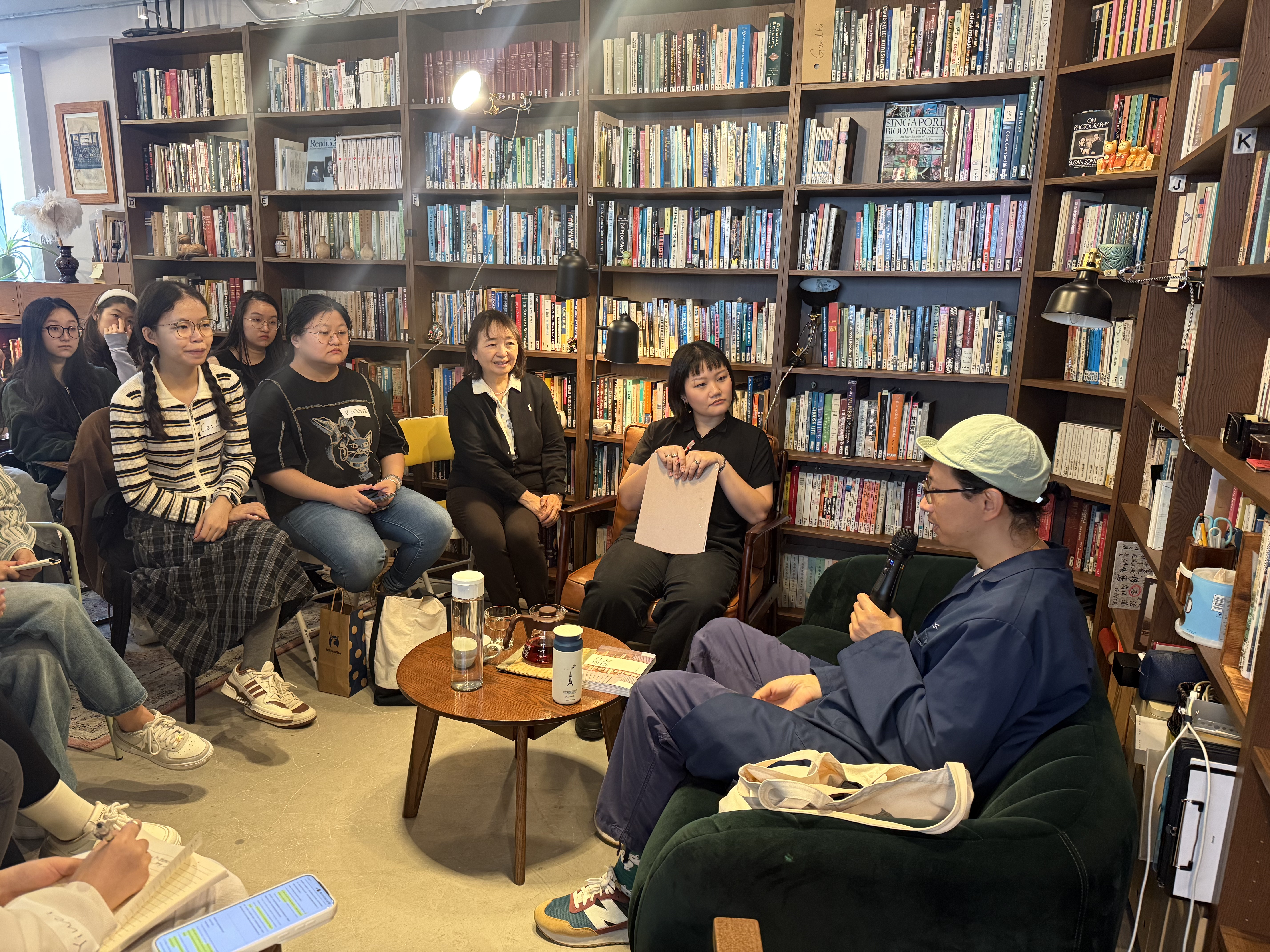
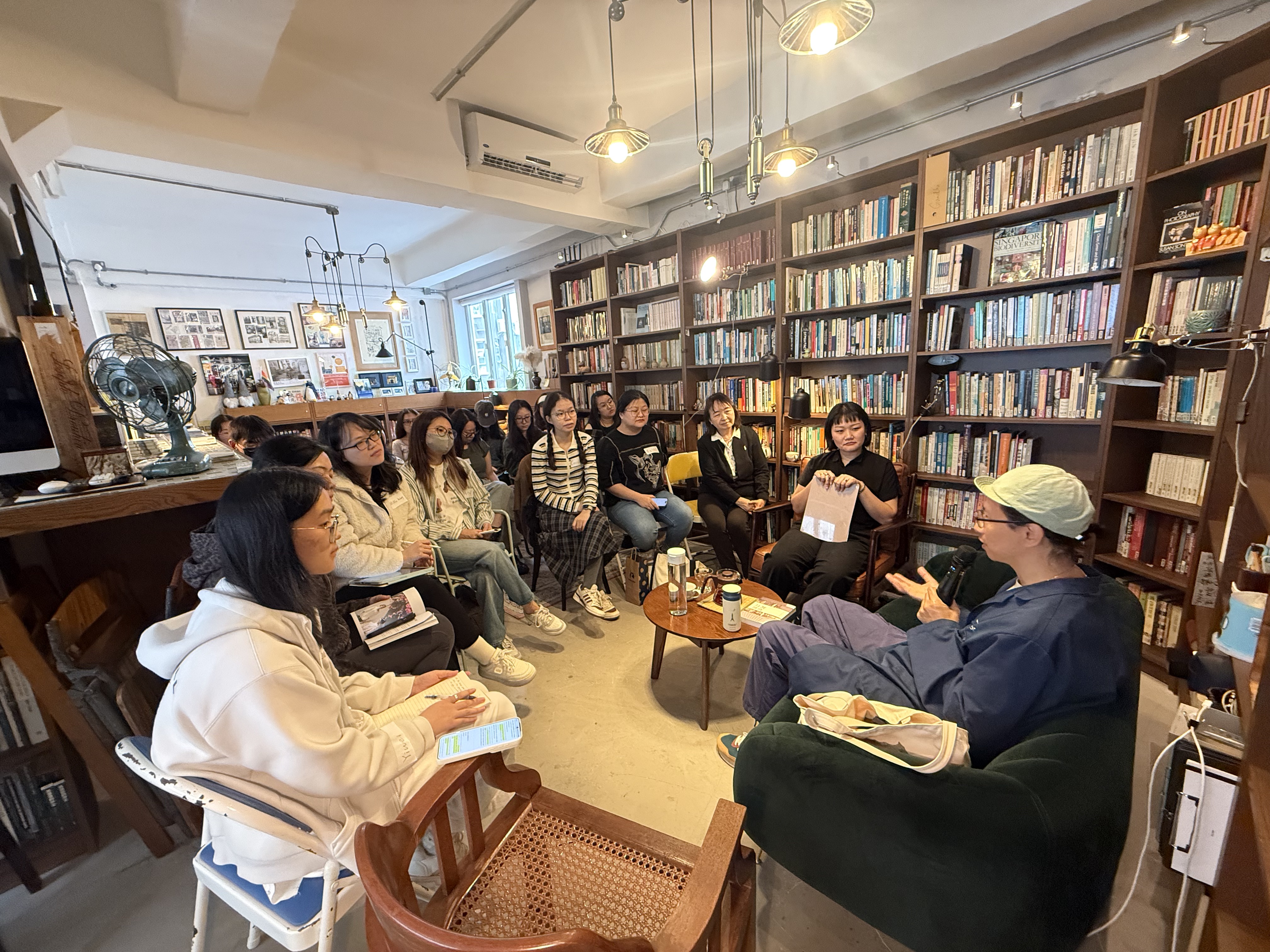
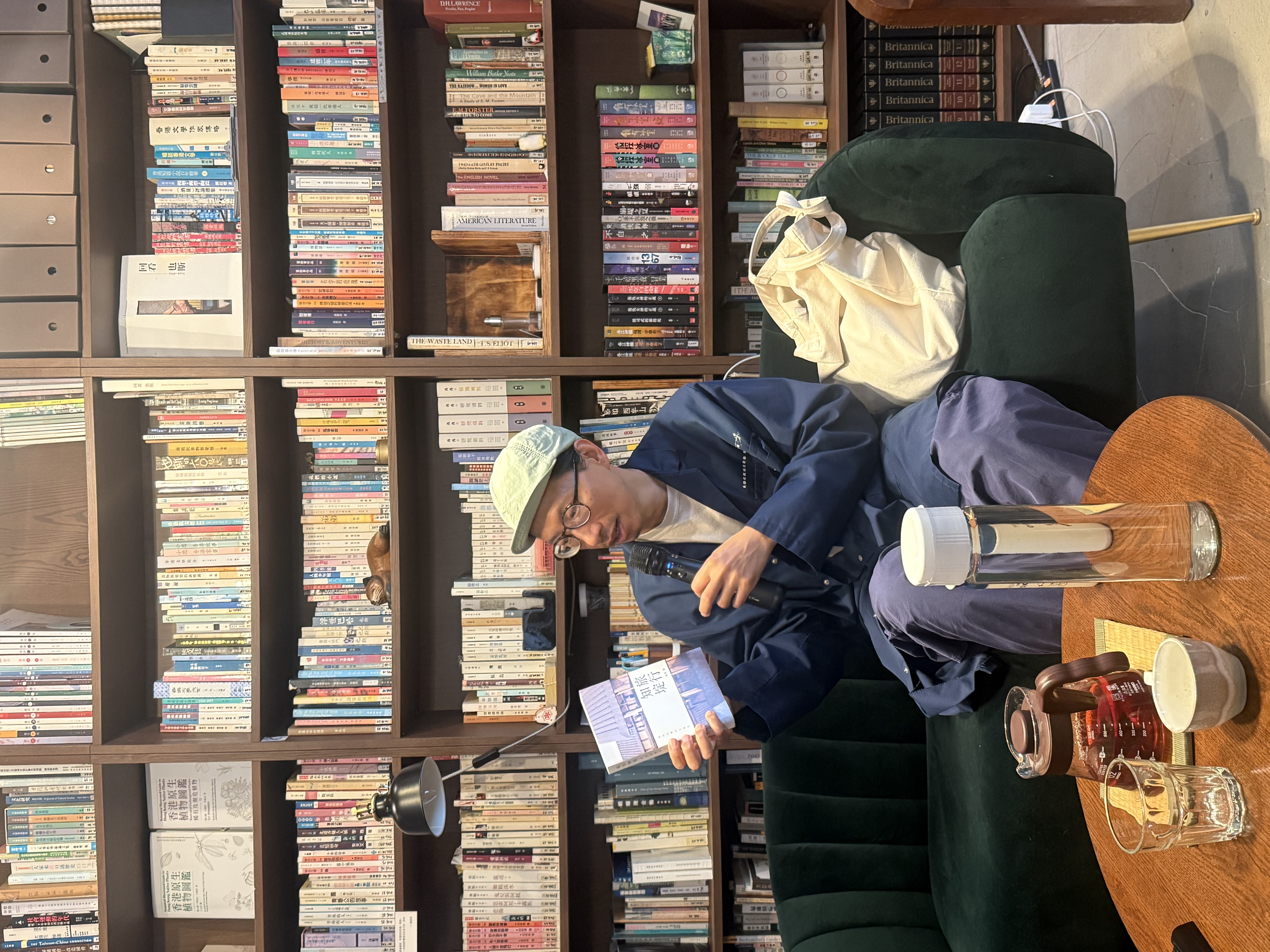
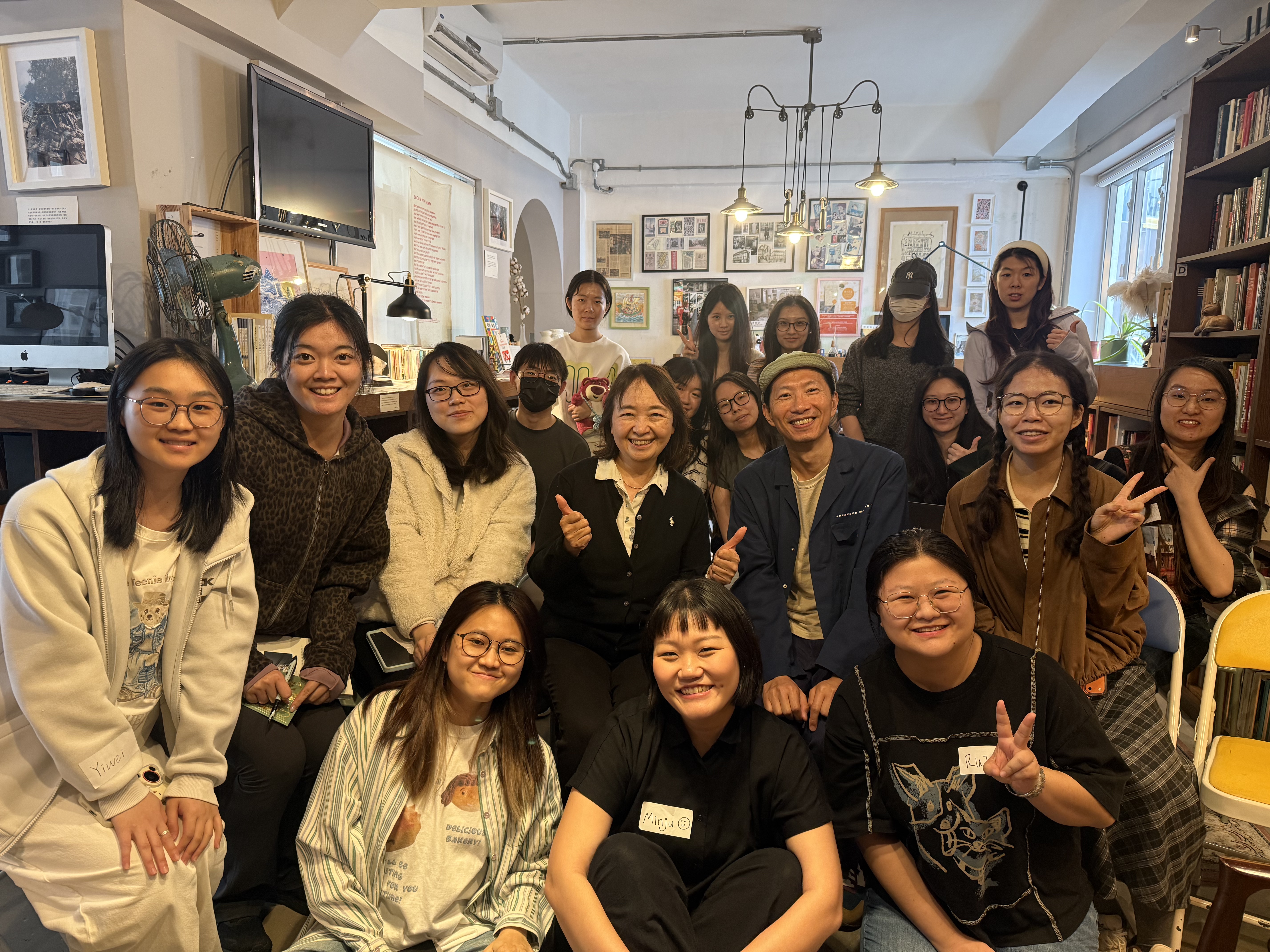
On a SATURDAY afternoon, Chan Kit arrives at Nose in the Books, a small humanities library nestled in Causeway Bay. In a loose plaid shirt, a hat and glasses, he looks gentle and unassuming, with a soft cloth bag slung over his shoulder. “Oh, I’m nervous too,” he admits after settling in – unhurried, sincere, like he’s talking to a friend. Surrounded by books, he talks through a life spent documenting the city – as writer, photographer, and everyday observer.
Multiple Identities
Many people know Chan Kit as a photographer, but he identifies himself first as a writer. “I always start as a writer,” he says, “and I would describe myself as one who happens to take his own photos.” His writing journey spans more than a decade, beginning as a reporter for a now-defunct magazine. There, he realized he likes to observe, find stories, write them, and document them with photographs. This background shaped his “detached” writing style. Journalists present facts instead of personal emotion or opinion. “I want things to speak for themselves. If I put in too much of myself, maybe it will block the thinking process of my readers.”
At first, as a journalist, he didn’t need to take pictures because the magazine had its own visual team. Nonetheless, he learned a lot from his colleagues. “We would describe what we wanted, and the photographers would take the pictures.” He learned through osmosis. When he started doing freelance work and needed some photos, he picked up a camera himself, drawing on those memories.
Beyond pen and camera, Chan Kit has – or rather, had – another identity: he was the owner of an antique shop. “I wonder, why does this pop up a lot?” he asks, slightly bemused by people’s interest in the shop that is no more. “When I was freelancing, I had these two paths – one is documenting Hong Kong with writing and photos, the other is the shop.” These seemingly disparate occupations are, however, key to sustaining his writing and photography. “Maybe they’re not really that related, but sometimes you just have to do many different things.” When he was in the shop, he would choose to focus on the shop and step away from anything else. He would talk to customers or just do some cleaning. He compares this to a break between classes, explaining that he gets exhausted quickly if he does one thing nonstop. “To me, that’s a healthy lifestyle.”
So how does he juggle these identities – and keep going without burning out? His answer is simple. “For some people, they have this huge passion, and it burns out. They do it all the time, and soon there’s nothing left anymore.” That isn’t him. “For me, it’s a conscious decision not to be too focused. I keep doing like five things a week, and I enjoy having my plate full. I just need to tackle the tasks one by one, so I won’t get bored very quickly. It’s my philosophy to make it sustainable.”
The Photographer as Observer
When it comes to photography, Chan Kit carries a kind of humility. Having never taken a professional photography course, he relies solely on the visual instincts he absorbed during his magazine days. “It’s like some seeds planted somewhere inside me,” he says, his voice softening as he recalls how he used to watch the staff photographers work.
In his photography, Chan Kit tries to present the Hong Kong he is familiar with, the everyday spaces he lives in. As with his “detached” writing, he tries to reproduce what’s in front of him without embellishment. “It is always what you see, not what you take.” He believes part of his work is to discover those often overlooked, small yet interesting details – a particular shade of color, a unique building – that draw him in.
Take, for example, a public housing estate that caught his eye. “Public estates have a certain ‘scheme’,” he explains. “But that one is different – it’s a shocking pink.” Noticing this slight but surprising anomaly, he couldn’t resist snapping a photo. It is exactly these moments – finding the unexpected within the ordinary – that define his artistic portfolio.
Chan Kit also conducts photography workshops occasionally. But as a self-proclaimed “non-professional”, he says that he doesn’t teach techniques. “I don’t feel I’m knowledgeable enough to do so. And more importantly, to me, it’s not all about skills.” Instead, his goal is to show people how to truly see. “How can you take a photo of an object before you see the beauty in it?” he remarks. Framing, lighting, and post-processing are indispensable, but before those, he urges, “Go out there and observe.” Again, it is about what we see, not what we take with our cameras.
Truly Living in Hong Kong, and Loving It
Chan Kit distinguishes between “inhabiting” a place and “truly living” in it. He observes that many people settle for the former, sticking to a fixed schedule. “They work there, go straight from the office to the gym, grab dinner and then go to bed. That’s their life, but also not quite a life,” he comments. “When you really live in a place, you have the curiosity to find out more about it.” Curiosity is what fuels his artistic pursuit, and Hong Kong has never stopped giving him reasons to stay curious.
“Showcasing the beauty of the city is part of my everyday life,” says Chan Kit. He has been doing so through his photos for more than 10 years. “Hong Kong is interesting to me because it is so small. It’s like when you pack too much stuff in this container. Everything is sort of jammed together, but then it’s sort of organic.” It’s a quality he hasn’t found anywhere else, and the organic chaos intrigues him. He adds, “It’s chaotic, but you can always find something nice.”
His love for Hong Kong is resolute, a natural part of his worldview. Once, when serving as a committee member of Open House Hong Kong, he was asked by a reporter whether he found the city beautiful. The question caught him off guard. “I was stunned. To me, ‘no’ was never an option,” he explains. “If that was a no – even a possibility of a no – what would I have been doing? My whole belief system would collapse.” He recognizes that people may see this congested, bustling city differently, but to him it is always a yes because of its irreplaceable vibrancy. “Even in the same neighborhood you walk past every day, somehow you can always see something new in it,” he muses.
But not everyone looks. There is this spot in Kennedy Town, with a coffee shop and an 800-year-old tree in the backdrop, that is always swamped with visitors. Chan Kit finds this amusing. “That is one of my favorite spots to observe human behavior,” he quips. “They totally didn’t see the beautiful tree there. It makes me wonder why the coffee shop is more important than the tree.” The spectacle of the ignored tree is a symptom of the daa kaat (check-in) culture.
“There’s nothing wrong with going to a spot, taking pictures and sharing them with others. If you don’t go out, you’ll never get anything to share. It’s nice, but it shouldn’t end there.” To Chan Kit, venturing to a hotspot is only the first step. In this city he loves, he constantly looks for interesting places, photographs them, and then “elaborates” – digging into the story behind the image. “What I’m doing is essentially elaboration after checking-in. Everything I write about is Instagrammable. But do you have the curiosity to know more? That is the real question.”