
Keynote
Date: May 26 2026 | Time: 9:15AM | Venue: CPD-3.04, Run Run Shaw Tower, Centennial Campus, HKU
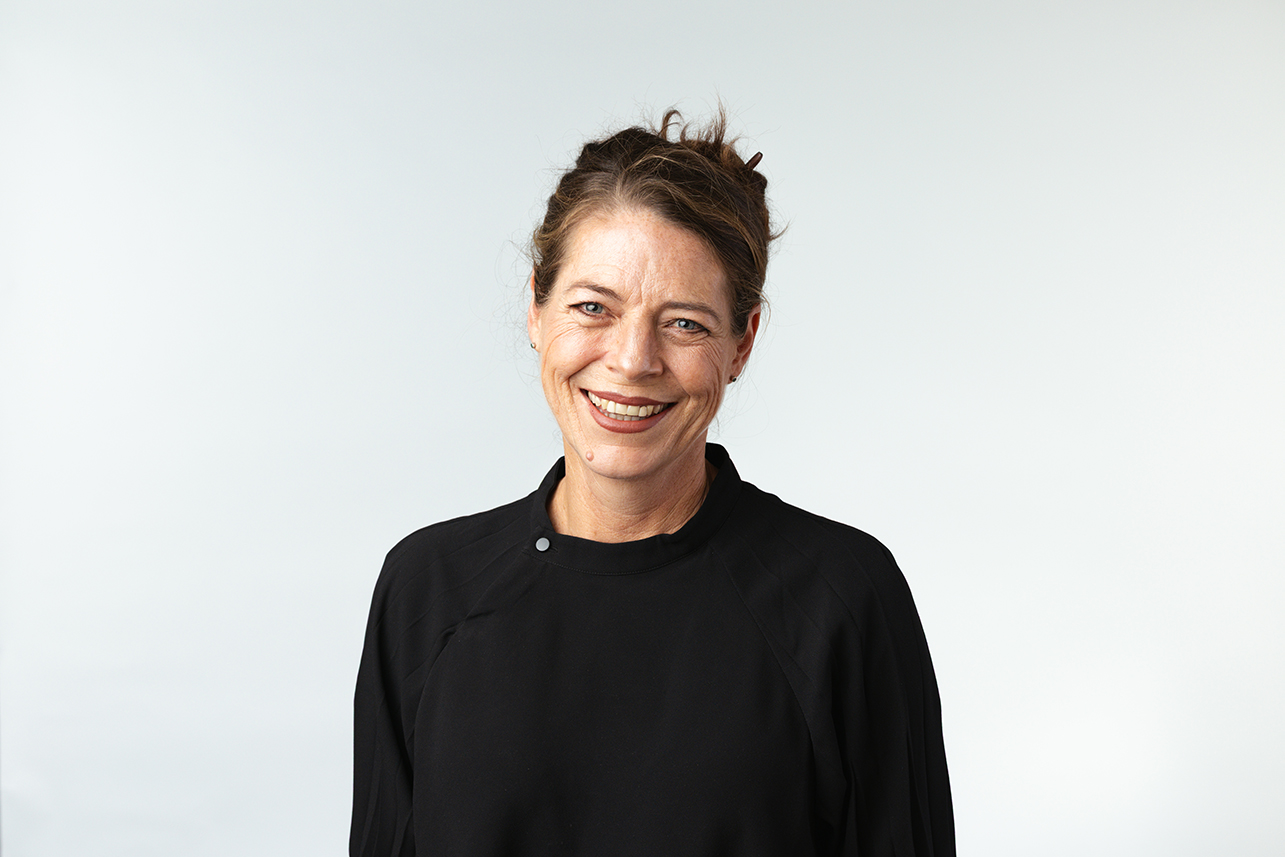
Prof. Amanda Third
Co-Director of the Young and Resilient Research Centre
Professorial Research Fellow at the Institute for Culture and Society, Western Sydney University

Teknalgia: On Caring About and for Children in a Digital World
Australia made international headlines in December 2024, when the government legislated the Social Media Minimum Age amendment to the Online Safety Act, which prohibited children under the age of 16 from having a social media account. Decision makers in other jurisdictions have closely monitored this move, with the result that the international movement to evict children from social media has gained considerable momentum: 40+ countries have either passed or are considering similar legislation.
A logic of care for the next generation - namely, the desire to prevent children from experiencing the reportedly negative mental health effects associated with their digital media practices - has framed public debates about age-based social media restrictions and has posited restrictive approaches to the regulation of children’s social media use as an urgent moral imperative. That this is so is perhaps not surprising, given that, as I will argue, children are the object par excellence of caring practices.
Through a close dissection of texts generated by government, legacy media and parent advocacy groups in Australia, this lecture will trace the diverse vectors of this logic of care in order to reflect on what they reveal about the social, cultural and political stakes of childhood in the 21st century. I will firstly argue that the social media age restrictions debate framed the task of caring about and for (Noddings, 2022) children primarily as that of worrying. I theorise this cultural script through the lens of a tripartite form of grief and concern relating to the figure of the child/childhood that I call teknalgia (from the Greek teknon (τέκνον) for ‘child’ and álgos (ἄλγος) meaning pain, grief or distress), tracing how it maps onto concerns about the influence of technology not just on children but on broader society. In doing so, I demonstrate that, fueled by a care for an abstract figure of the child, a range of political and economic drivers - among them a concern to reassert the sovereign power of the nation-state in a world characterised by transnational flows (Wendy Brown, 2010; Third, 2025) - dominated the debates and decision making around the Australian social media age restrictions, ultimately sidelining the care of living, breathing children. Lifting out of Hannah Arendt’s work on natality, the lecture concludes by offering an alternative vision of how those with a vested interest in nurturing the next generation might better care for children in a world mediated by digital technologies.
References:
- Brown, W. (2010). Walled states, waning sovereignty. Princeton University Press.
- Noddings, N. (2002). Starting at Home: Caring and social policy. Berkeley: University of California Press.
- Third, A. (2025). On board the Australian social media ‘ban wagon’: regulatory theatre, the public child, and the hyper-enthusiastic state. In C. Nelson, D. Buiten, & J. Death (Eds.), The Public Child: Media Power, Strategic Silencing, and Children's Rights in Australia (pp. 25-52). Palgrave Macmillan.
Speaker Biography
Professor Amanda Third (PhD) is Professorial Research Fellow and Co-Director of the Young and Resilient Research Centre in the Institute for Culture and Society at Western Sydney University and Faculty Associate in the Berkman Klein Center for Internet and Society at Harvard. An international expert in youth-centred, participatory research, Amanda’s work investigates children's and young people’s cross-platform technology practices. She has led projects in over 80 countries, with partners across corporate, government and not-for-profit sectors, and supported by youth co-researchers, with the aim of channelling youth-centred research into international policy and practice efforts. She also has a deep love for critical theory.